A customer walks into a vacuum shop and asks for “vacuum bags.” Half the internet thinks they mean bags for clothes under the bed. That is not what this guide is about.
This guide is about vacuum cleaner bags. These are the bags inside canister vacuums, upright vacuums, central vacuum systems, robot vacuum docks, shop vacs, and some commercial machines. Vacuum bags matter more than people think. A bad bag can leak dust, cut suction, and make the motor work harder. A good bag holds dirt, protects airflow, and helps keep fine dust out of the room.
What Are Vacuum Cleaner Bags and How Do They Work?
A vacuum cleaner bag has two jobs.
- It holds the dirt.
- It also acts as part of the filter system.
When your vacuum pulls in air, dirt and dust move into the bag. Larger dirt stays inside. Fine dust gets trapped by the bag material. Cleaner air then moves through the rest of the vacuum and exits through the exhaust.
This is why bag quality matters.
A weak bag may collect crumbs, but let fine dust escape. A strong bag can trap more fine particles and keep airflow steady for longer.
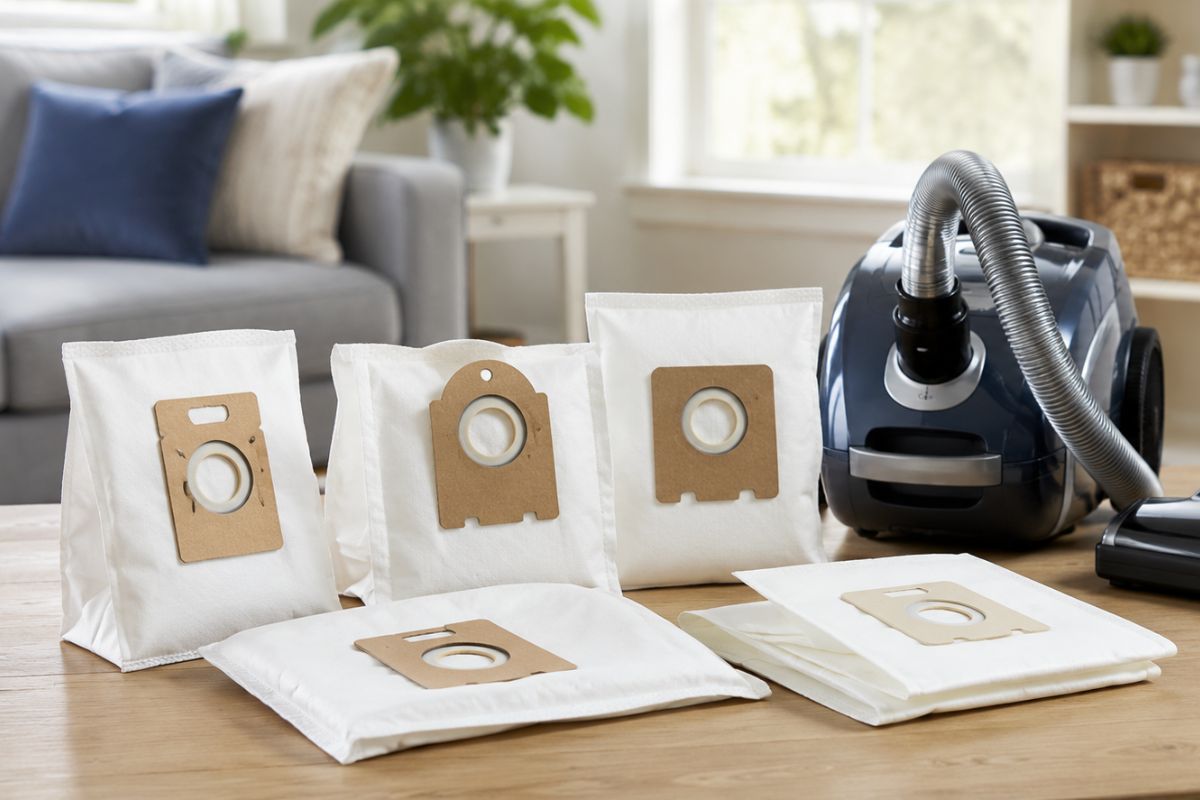
Vacuum bags are usually made from paper, cloth, synthetic fiber, or multi-layer filter media. Paper bags are common and affordable. Synthetic bags are stronger and often better for fine dust. HEPA-style bags are made for better particle capture.
Bagged vacuums can be cleaner to empty than bagless vacuums because you remove the sealed bag as a whole instead of dumping loose dust into the trash. That matters if someone in the home sneezes every time dust looks at them funny.
Types of Vacuum Bags by Machine Type
Not all vacuum bags work the same way.
The machine type changes the bag shape, size, seal, and filter needs.
Canister vacuum bags
Canister vacuum bags are used in pull-behind vacuums. These bags are often compact and shaped to fit inside the canister body.
Best for:
- Homes with stairs
- Hardwood and mixed floors
- Smaller storage spaces
- People who want lighter hose handling
Watch for:
- Brand code
- Model number
- Collar shape
- Bag seal quality
Upright vacuum bags
Upright vacuum bags are used in stand-up vacuums. They are often longer and may sit inside an outer bag chamber.
Best for:
- Carpet
- Larger rooms
- Pet hair
- Faster weekly cleaning
Watch for:
- • Bag type code
- • Neck opening size
- • Closure system
- • Whether the vacuum uses paper or synthetic bags
Central vacuum bags
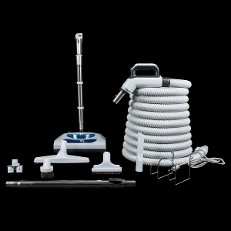
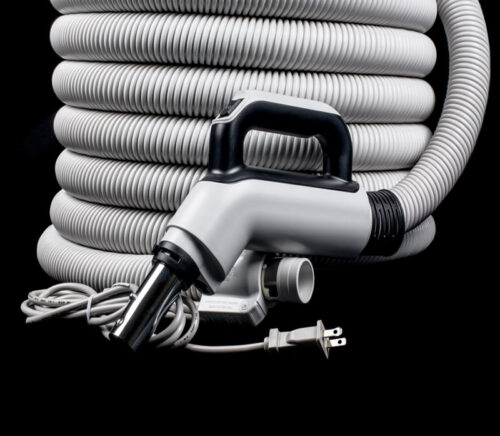
Central vacuum bags are larger because central vacuum units collect more dirt. Some central vacuum systems use disposable bags. Others use a bagless bin with a filter.
Best for:
- Whole home cleaning
- Larger homes
- Long-term use
- Strong suction
Watch for:
- Power unit brand
- Bag capacity
- Whether your unit is bagged, bagless, or hybrid
- Synthetic filtration level
Robot vacuum dock bags
Robot vacuum bags are used inside auto-empty stations. The robot returns to the dock, and the dock pulls dirt into a small disposable bag.
Best for:
- Daily light cleaning
- Busy homes
- Pet hair control
- Hands-off cleaning
Watch for:
- Dock model, not just robot model
- Bag capacity
- App alerts
- Pet hair buildup
Robot vacuum bags fill faster in homes with pets. App alerts can help, but still check the bag by hand if suction drops or the dock sounds louder than usual.
Wet and dry shop vac bags
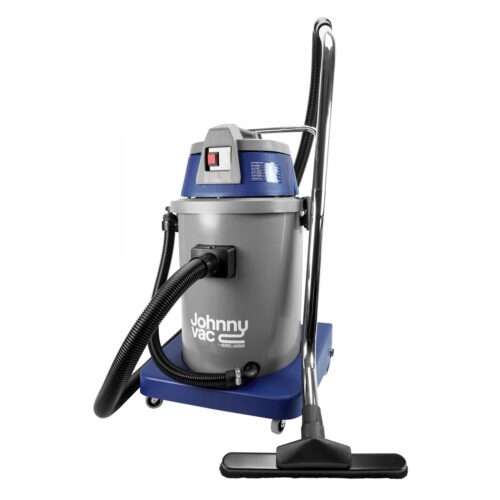
Shop vac bags collect dust, drywall dust, wood dust, and dry debris. Some wet and dry vacuums should not use a paper bag for wet messes.
Best for:
- Garage cleanup
- Basement cleanup
- Renovation dust
- Workshop debris
Watch for:
- Tank size in gallons
- Dry use only rules
- Fine dust bag rating
- HEPA cartridge filter pairing
Backpack vacuum bags
Backpack vacuum bags are common in commercial cleaning. They are built for long cleaning routes and high dust load.
Best for:
- Offices
- Schools
- Shops
- Cleaning crews
Watch for:
- Large pack size
- Comfort and dust control
- Commercial grade bag strength
HEPA Vacuum Bags: Are They Worth It?
HEPA stands for high-efficiency particulate air.
A true HEPA filter standard is often described as removing at least 99.97 percent of particles at 0.3 microns. That number matters because 0.3 microns is a tough particle size to capture.
For vacuum bags, the word HEPA usually means the bag is made with better filter media than a basic paper bag. It may trap more fine dust, pollen, pet dander, and smoke particles.
HEPA bags are worth it if:
- You have pets.
- Someone has allergies.
- Someone has asthma.
- Your home gets dusty fast.
- You clean carpet often.
- You want better dust control when changing the bag.
That does not mean every bag with big filter claims is equal. Some products use words like “HEPA type” or “HEPA like.” Those phrases do not always mean the product meets a true HEPA standard. Check the exact claim before buying.
Bag HEPA vs post-motor HEPA filter
A HEPA bag traps dust before air reaches the motor.
A post-motor HEPA filter cleans air near the exit point.
Both can help.
For the best dust control, you want a good bag, a clean motor filter, a clean exhaust filter, and tight seals. A fancy bag will not fix a cracked hose, loose lid, or dirty filter.
Who needs HEPA vacuum bags most?
HEPA bags are a smart pick for:
- Pet owners
- Homes with carpet
- People with dust allergies
- Homes near construction dust
- Homes with fine powder messes
- Anyone who hates dust clouds during bag changes
A basic paper bag may be fine for light cleaning in a small home. For dust control, pets, and carpet, HEPA or synthetic bags are worth the higher price.
OEM vs Generic Vacuum Bags: Honest Comparison
OEM means original equipment manufacturer.
That means the bag comes from the vacuum brand or an approved source.
Generic bags are made by another company to fit the same vacuum.
Here is the simple answer.
- OEM bags are safer for premium vacuums.
- Good generic bags can work for budget vacuums.
- Cheap no-name bags are risky.
OEM vacuum bags
Pros:
- Best fit
- Better seal
- Less chance of leaks
- Often tested for that machine
- Lower risk for premium vacuums
Cons:
- Higher price
- Fewer pack size choices
- Sometimes harder to find
Generic vacuum bags
Pros:
- Lower price
- Easy to buy in bulk
- Good enough for some basic machines
- More options for older vacuums
Cons:
- Fit can vary
- Seal may be weaker
- Bag may tear
- Filter level may be unclear
- Warranty issues may apply for some brands
Quick verdict
- Use OEM bags if your vacuum is expensive, newer, or still under warranty.
- Use trusted generic bags if your vacuum is older, basic, or low cost.
- Avoid very cheap bags if they feel thin, fit loose, or have weak seams.
How to Find the Right Bag for Your Vacuum Model
The safest way to buy a vacuum bag is to match the model number.
- Do not guess from the vacuum color.
- Do not guess from the shape.
- Do not guess because the bag “looks close.”
That is how people end up with a bag that fits like a sock on a toaster.
Step 1: Find the model number
Look in these places:
- Bottom of the vacuum
- Back of the vacuum body
- Inside the bag door
- Near the motor label
- On the owner’s manual
- On the old bag box
Step 2: Find the bag type code
Many bags use type codes.
Common examples include:
- Type C
- Type U
- Type Y
- Type Q
- Type S
- Type FJM
- Type GN
- Type CC
The code matters because a single brand may use multiple bag types.
Step 3: Match the collar
The collar is the stiff part that attaches to the vacuum.
Check:
- Hole size
- Shape
- Locking tabs
- Rubber seal
- Cardboard or plastic collar
If the collar does not seal well, dust can leak into the vacuum body.
Step 4: Check the bag material
Choose based on need:
- Paper bag: basic cleaning
- Synthetic bag: better airflow and strength
- HEPA bag: fine dust and allergy control
- Carbon layer bag: odor control
- Shop vac fine dust bag: renovation and workshop dust
Step 5: Buy the right pack size
If you vacuum often, buy a larger pack.
If you are trying a new generic bag, buy a small pack first.
How Often Should You Replace a Vacuum Cleaner Bag?
Replace most vacuum bags when they are about two-thirds to three-quarters full.
Do not wait until the bag is packed tight.
A very full bag can reduce suction, raise motor strain, and leave dirt behind.
Southern Living recommends replacing a vacuum bag when it is about two-thirds full rather than waiting until it overflows. It also notes that filters can affect suction and air quality when clogged.
Simple replacement guide
| Home type | Bag change timing |
|---|---|
| Small home, light use | Every 2 to 3 months |
| Average home | Every 1 to 2 months |
| Pet home | Every 2 to 4 weeks |
| Heavy carpet use | Every 2 to 4 weeks |
| Renovation dust | After each heavy use |
| Robot vacuum dock | Check every 2 to 6 weeks |
| Central vacuum | Check monthly, replace as needed |
Signs your vacuum bag needs changing
- Suction feels weak.
- Vacuum smells dusty.
- Vacuum sounds louder.
- Dirt stays on the floor.
- Bag feels firm or packed.
- Exhaust smells stale.
- Bag full light turns on.
Do not fully trust the bag full light
Bag full lights can help, but they are not perfect.
Some lights react to airflow, not only bag level. A clog, dirty filter, or packed pet hair can trigger the light early. A loose bag may also confuse the system.
Check the bag by hand if suction drops.
Do Budget and Off-Brand Vacuum Bags Work?
Some do.
Some do not.
The problem is not the word “generic.” The problem is poor fit and weak material.
A decent off-brand bag can work well in a basic vacuum. A poor bag can leak dust, tear at the seam, or slide off the intake.
Check these before buying budget bags:
- Does it list your exact model?
- Does the bag feel thick enough?
- Does the collar match your old bag?
- Does it have a rubber or tight seal?
- Does the pack list filter level?
- Does it have real reviews?
- Does it say HEPA, or only HEPA-like?
Avoid cheap bags if:
- The collar bends too easily.
- The bag feels thin.
- The seam looks weak.
- The listing says “universal” with no model listed.
- You have a premium vacuum.
- Your vacuum is still under warranty.
Best rule:
- Use cheap bags only when the fit is clear, and the vacuum is basic.
- Use better bags when dust control, suction, and motor protection matter.
Can You Empty and Reuse a Vacuum Bag?
Most disposable vacuum bags should not be emptied and reused.
Yes, you can sometimes shake out a paper bag.
No, it is usually not worth it.
Here is why:
- The pores can stay clogged.
- Fine dust stays in the bag fibers.
- The bag can tear.
- The seal can weaken.
- Dust can escape during reuse.
- Suction may still stay low.
Reusable cloth bags are different. Some commercial machines and older vacuums use washable or reusable cloth bags. Those should be cleaned based on the owner’s manual.
Never wash a disposable paper bag.
Never reuse a bag that held damp dirt, food, drywall dust, ash, or fine powder.
How to Change a Vacuum Cleaner Bag
Turn the vacuum off first.
Unplug it if it has a cord.
Then follow these steps:
- Open the bag door or canister lid.
- Pull the old bag out by the collar.
- Seal the bag if it has a closing tab.
- Throw the old bag away.
- Wipe loose dust from the bag chamber.
- Check the motor filter.
- Slide the new bag collar onto the intake.
- Make sure it locks or seals flat.
- Close the lid.
- Turn the vacuum on and listen for normal airflow.
If the lid does not close, stop.
The bag may be seated wrong.
Forcing the lid can bend the collar and create a leak.
A Quick Buying Checklist
Use this before you buy vacuum bags:
- I know my vacuum brand.
- I know my model number.
- I know the bag type code.
- I checked the collar shape.
- I know if I need HEPA.
- I checked if generic bags affect warranty.
- I know how many bags I need.
- I checked the return policy.
- I avoided mystery “universal” bags.
Best Vacuum Bag by Need
| Need | Best bag choice |
|---|---|
| Basic cleaning | Paper or standard synthetic bag |
| Pets | HEPA or multi-layer synthetic bag |
| Allergies | HEPA bag plus clean exhaust filter |
| Odors | Bag with carbon or odor layer |
| Carpet | Strong synthetic or OEM bag |
| Central vacuum | Large central vacuum bag matched to unit |
| Robot vacuum dock | Dock-specific disposable bag |
| Workshop dust | Fine dust shop vac bag |
| Premium vacuum | OEM bag |
Common Vacuum Bag Mistakes
- Mistake 1: Buying by brand only
Brand is not enough. Many brands have several bag types.
- Mistake 2: Waiting until the bag is full like a brick
A packed bag hurts airflow. Replace it earlier.
- Mistake 3: Ignoring the filter
A new bag will not fix a clogged filter.
- Mistake 4: Reusing disposable bags
You may save one bag and lose suction. Bad trade.
- Mistake 5: Using a wet bag for dry-only systems
Paper bags and moisture are not friends.
- Mistake 6: Buying the cheapest bag for an expensive vacuum
That is like buying fancy shoes and using string as laces.
Conclusion
Vacuum bags may look simple, but the right bag can protect your vacuum’s suction, trap dust, and help it last longer. Start with the model number. Match the bag type. Pick better filtration if you have pets, allergies, carpet, or a premium vacuum.
Do not wait until the bag is stuffed. Replace it when it is about two-thirds to three-quarters full. Your vacuum will breathe better. So will the person cleaning behind the couch.
FAQ
No. Vacuum bags are made by brand, model, and type code. Always match the model number or bag code before buying.
Check the model number on your vacuum. Then match the bag type code, collar shape, and filter level. If you still are not sure, bring the old bag or model number to a vacuum shop.
Yes, if you have pets, allergies, asthma concerns, carpet, or lots of fine dust. HEPA bags usually cost more, but they can trap smaller particles better than basic paper bags.
Some do, but not all. A bagged vacuum may use a standard bag, HEPA bag, motor filter, exhaust filter, or a mix of these. Check the product manual.
Yes. A HEPA bag does not always replace the exhaust HEPA filter. Southern Living notes that HEPA filters are often replaced every six months to one year, based on use. Homes with pets or allergies may need more frequent changes.
Most homes should check the bag monthly. Many bags last 1 to 3 months, but pets, carpet, and heavy use can fill bags much faster.
Most disposable bags should not be reused. The bag can stay clogged, leak dust, or tear. Use a new bag unless your vacuum uses a washable cloth bag.
Use the correct bag for your machine. Do not use plastic bags, paper lunch bags, cloth scraps, or homemade bags unless the vacuum is made for reusable cloth bags.
They may work only if the fit is exact and the material is strong enough. For premium vacuums, pets, allergies, or warranty coverage, use OEM or trusted replacement bags.
Call a repair shop if suction stays weak after changing the bag and filter, the vacuum smells hot, the bag compartment fills with loose dust, or the bag keeps slipping off.